

Castle Howard
Of all places that best symbolise the cultural ideal captured in the phrase “green and pleasant land,” the Howardian Hills of North Yorkshire are perhaps truly worthy of the moniker - an undulating landscape of woodland and pasture, poised between the rocky rises of the Moors to the north and the sprawling vales of Pickering and York below. A splendid swathe of English Arcadia, draped with majesty across the north of England and crowned by a castle of unrivalled beauty.
For over three centuries, Castle Howard has stood in serene resplendence atop a prominent ridge, encircled by formal gardens, parkland, and lakes. Designed by Sir John Vanbrugh in the English Baroque style of his own creation, the fantastical building remains as celebrated today as it was in its earliest years: its domed central hall for centuries an imposing silhouette upon the surrounding horizon, and further consigned to immortality as the inanimate star of the 1980s adaptation of Evelyn Waugh’s ‘Brideshead Revisited’.
It’s celebrity status belied the fact that a fire in 1940 had very nearly destroyed the house entirely - decimating much of its interior and reducing the rear of the house to a hollowed shell, left open to the elements under a tarpaulin for the next 40 years. For present custodians, Nick Howard and his wife Victoria, embarking upon a vast programme of restoration throughout the Castle signified lighting a spark of a different kind - a 21st Century Renaissance of works, preserving the house for another 300 years or more.
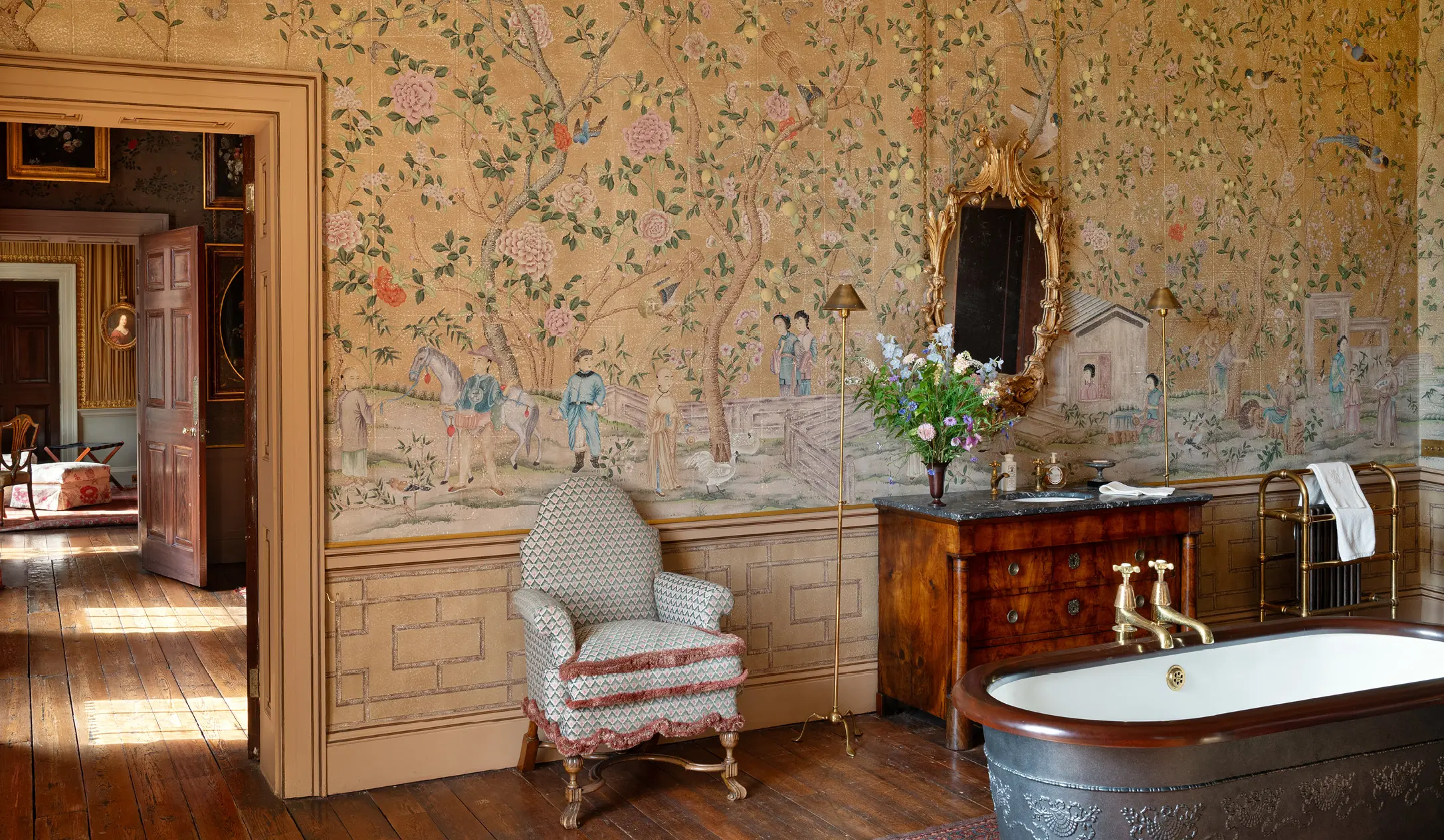
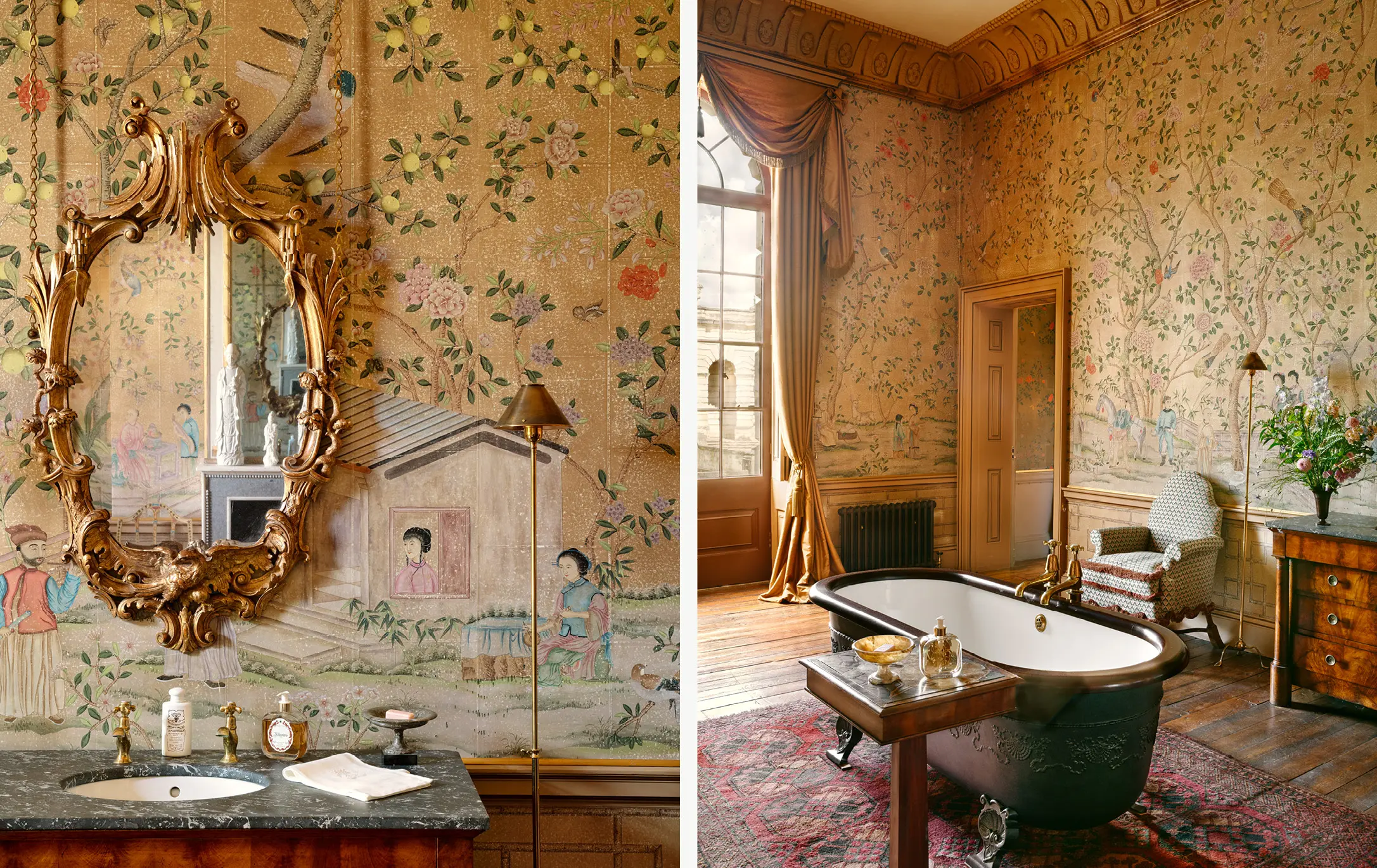
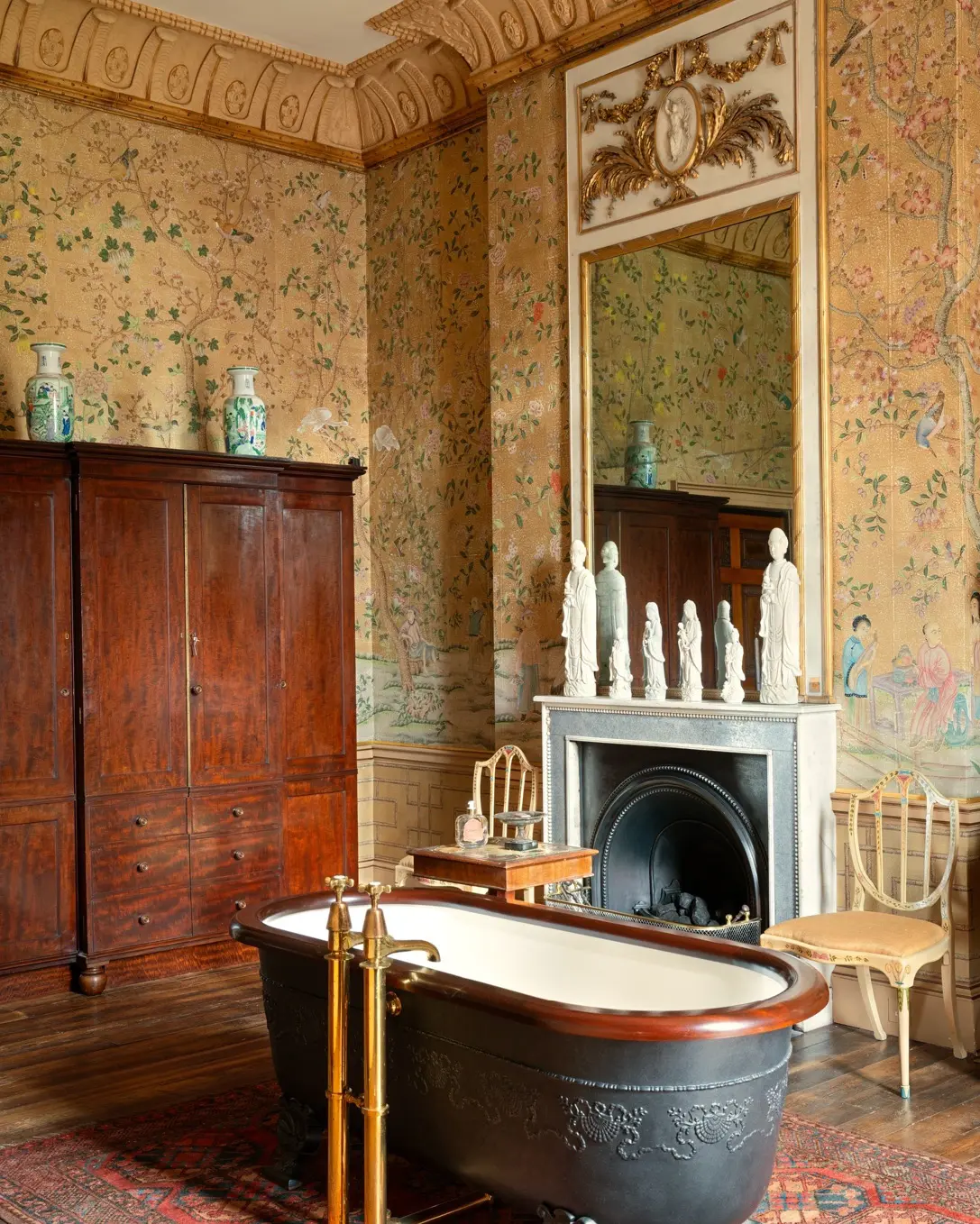
The Howards met interior decorator Remy Renzullo through their daughter, introduced as a friend “obsessed” with historic houses. He was quickly entrusted with reviving the first suite of interiors earmarked for renovation – guided by a prevailing aim that nothing would feel out of place in the context of the Castle and its layered history: including the choice of de Gournay’s ‘Abbotsford’ Chinoiserie design.
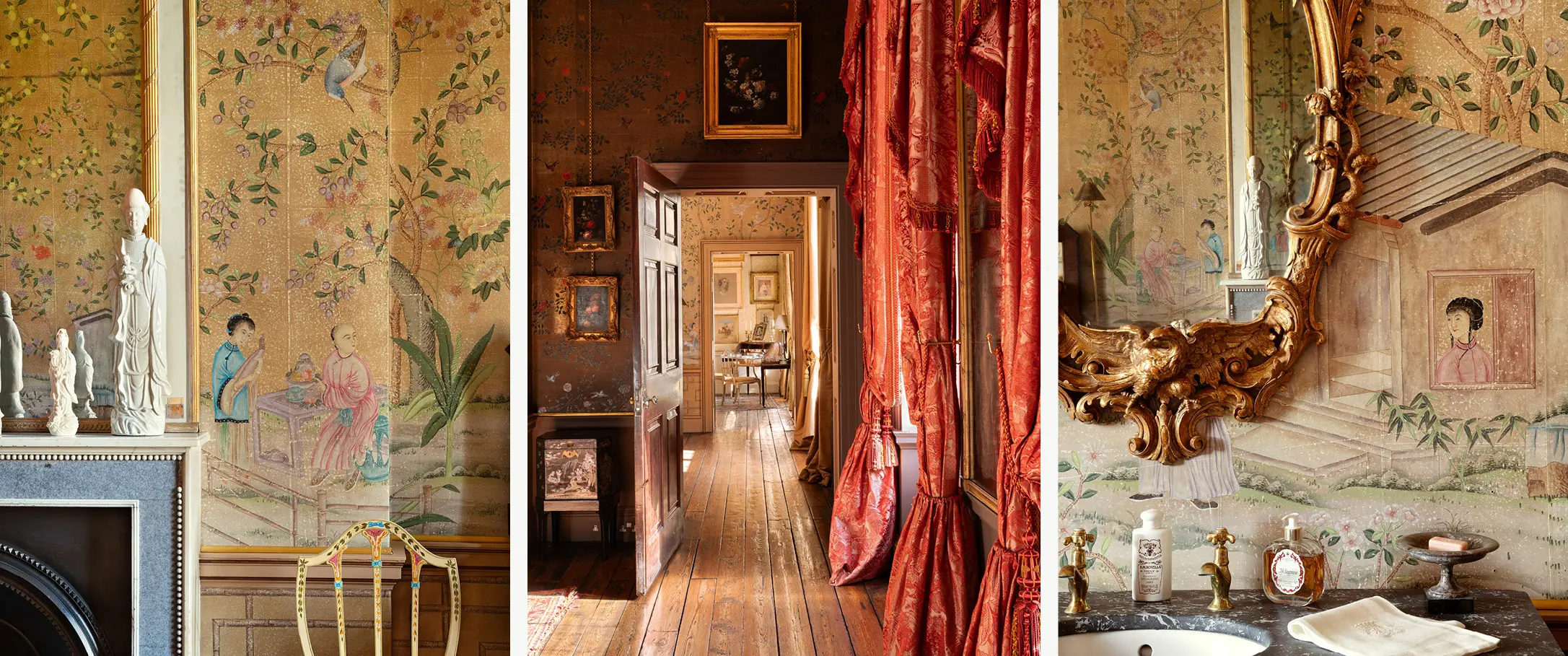
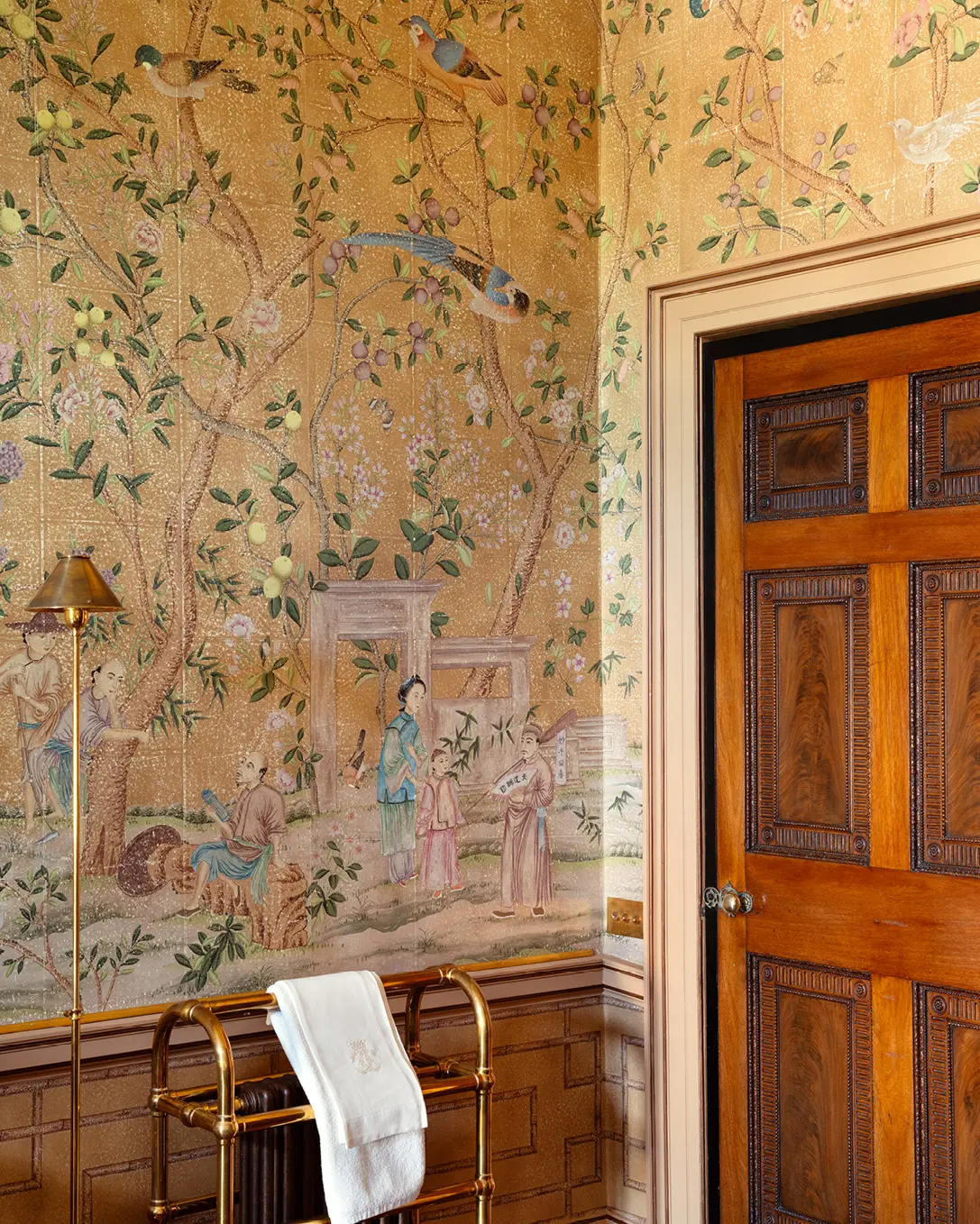
The Castle’s archival records mention various ‘Chinese’ wallpapers previously installed onsite. As a design from de Gournay’s Chinoiserie collection that faithfully reproduces a surviving antique set of panels, the ‘Abbotsford’ was a fitting choice for the walls of Lady Georgiana’s dressing room. The design maintains the full drama and grand scale of its historic counterpart which hangs in the drawing room at Abbotsford House, Sir Walter Scott’s home in Scotland. The enchanting design is a spectacular display of densely packed, finely worked figures, animals and exotic birds amidst flowering bushes of peony, finger citron, prunus, camellia and chrysanthemum. Faithfully detailed, its botanical depictions reflect rare and highly prized plant varieties of 18th-century Oriental gardens — specimens that would have been largely unknown to Western eyes in the late 17th and early 18th centuries.
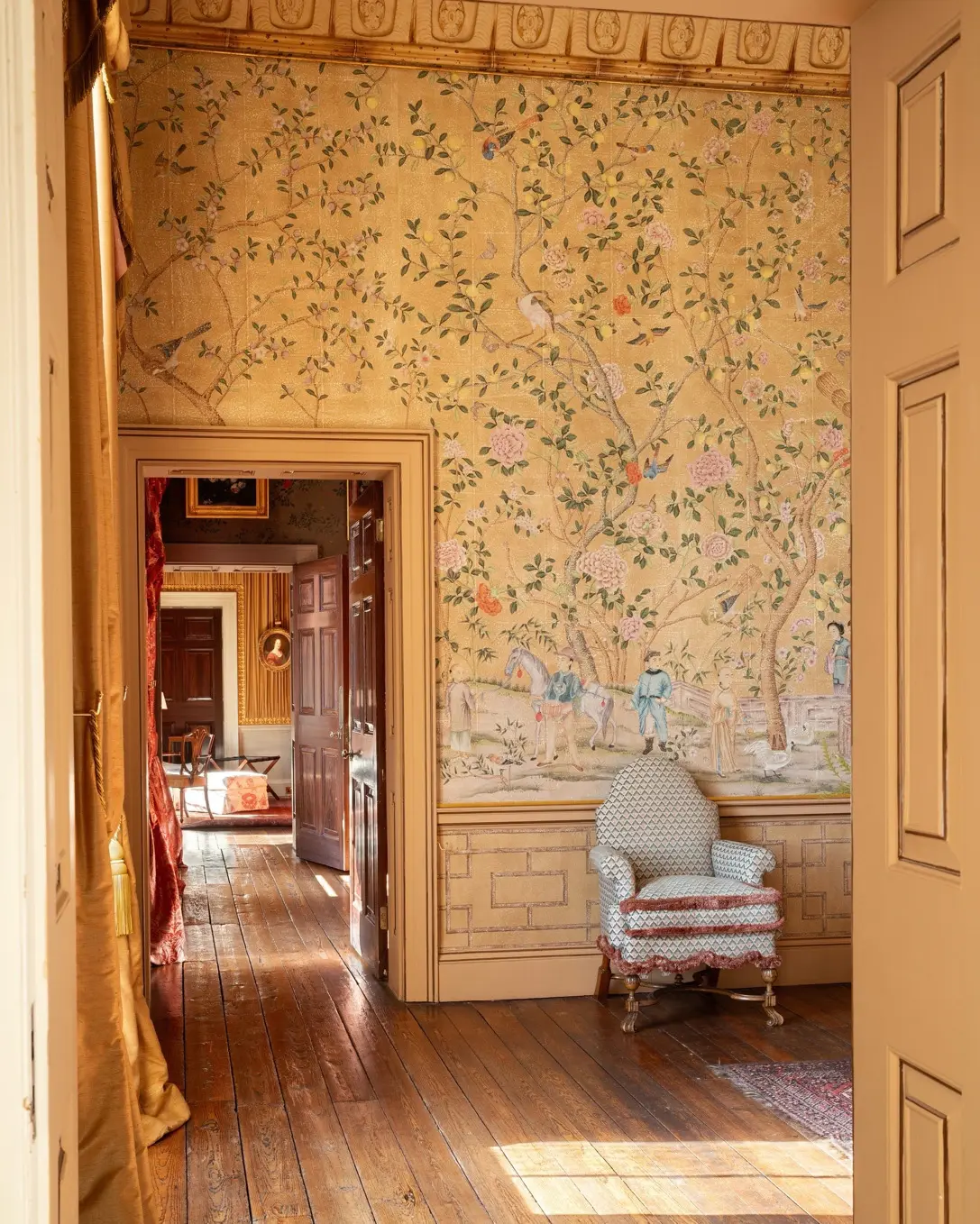
Hand-painted onto a ‘Stone Ochre’ India tea paper background – so called for the papers pieced together from the crates of tea travelling along historic trade routes. Its rich, polychrome palette appears softly aged and mottled, entirely in keeping with the Castle’s patinated interiors, and seemingly destined to remain in place for centuries to come.